Tell Me More About Peaches
Peaches
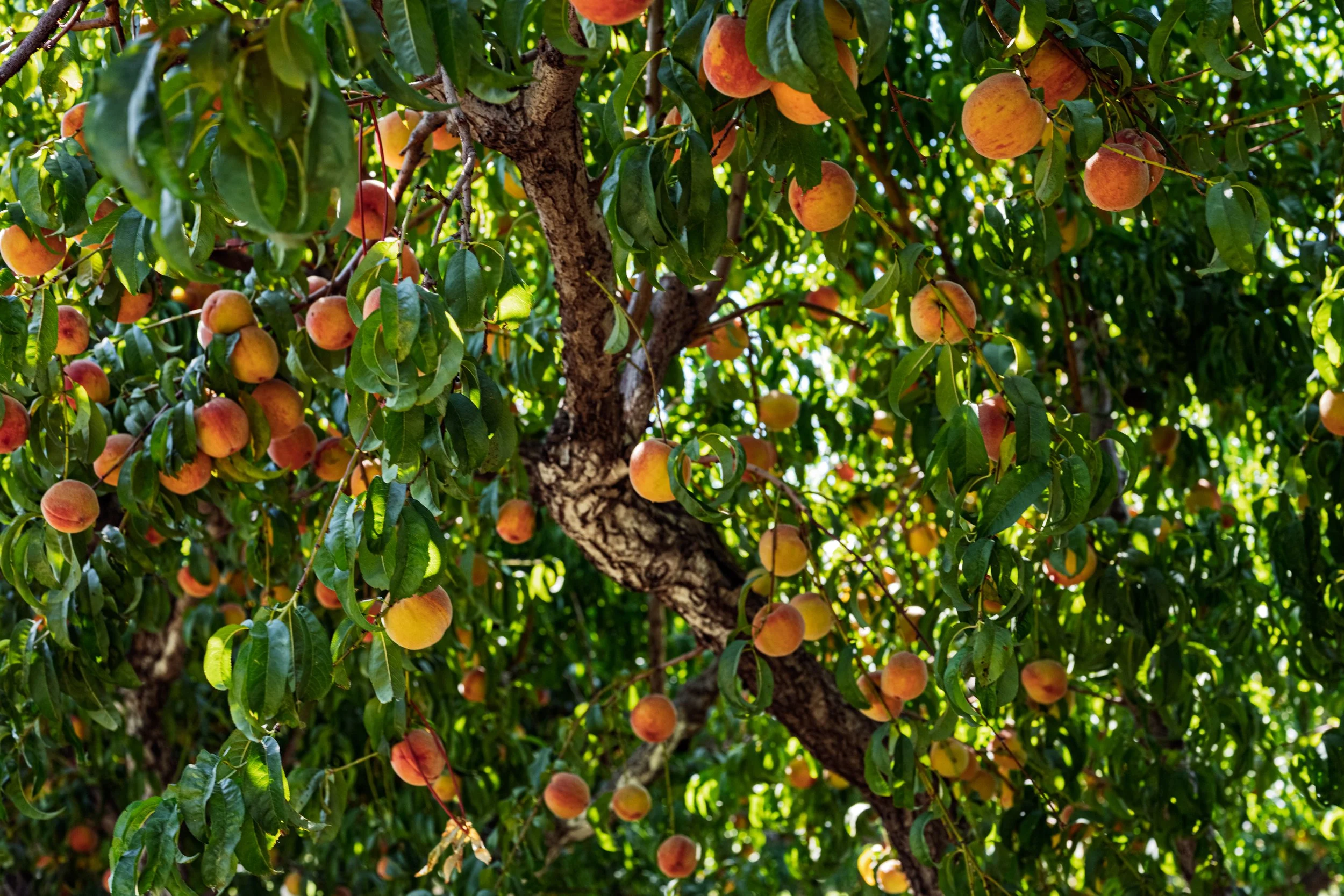
Peaches (Prunus persica) are deciduous fruit trees known for their sweet, juicy fruit. Although peaches are often associated with Persia (modern-day Iran), they were first domesticated in eastern China thousands of years ago and later spread throughout Asia, Europe, and the Americas.
Peach trees belong to the Prunus family, which also includes cherries, plums, apricots, and almonds. Because of this close relationship, peach pits have a flavor similar to almonds. Peaches come in both clingstone and freestone varieties and may have white or yellow flesh. White-fleshed peaches are typically very sweet with low acidity, while yellow-fleshed peaches often have a balance of sweetness and tang.
Peach trees thrive in temperate climates and require a period of winter chilling to produce fruit. They bloom early in the spring and are sensitive to late frosts, making careful orchard management important. Trees are relatively short-lived compared to other fruit trees, often producing fruit for 10–20 years.
Peaches are best enjoyed fresh and fully ripe. Because the fruit bruises easily and has a short shelf life, peaches are most flavorful when harvested at peak ripeness and used promptly.
🍑 Did You Know?
Peaches were first cultivated in China over 4,000 years ago.
The scientific name Prunus persica comes from an early belief that peaches came from Persia.
Peach trees are related to cherries, plums, apricots, and almonds.
Some peaches are freestone (the pit comes out easily) and others are clingstone.
Peach trees need cold winter hours to produce fruit and bloom early in spring.
Peaches taste best when they ripen on the tree and are enjoyed soon after harvest.